
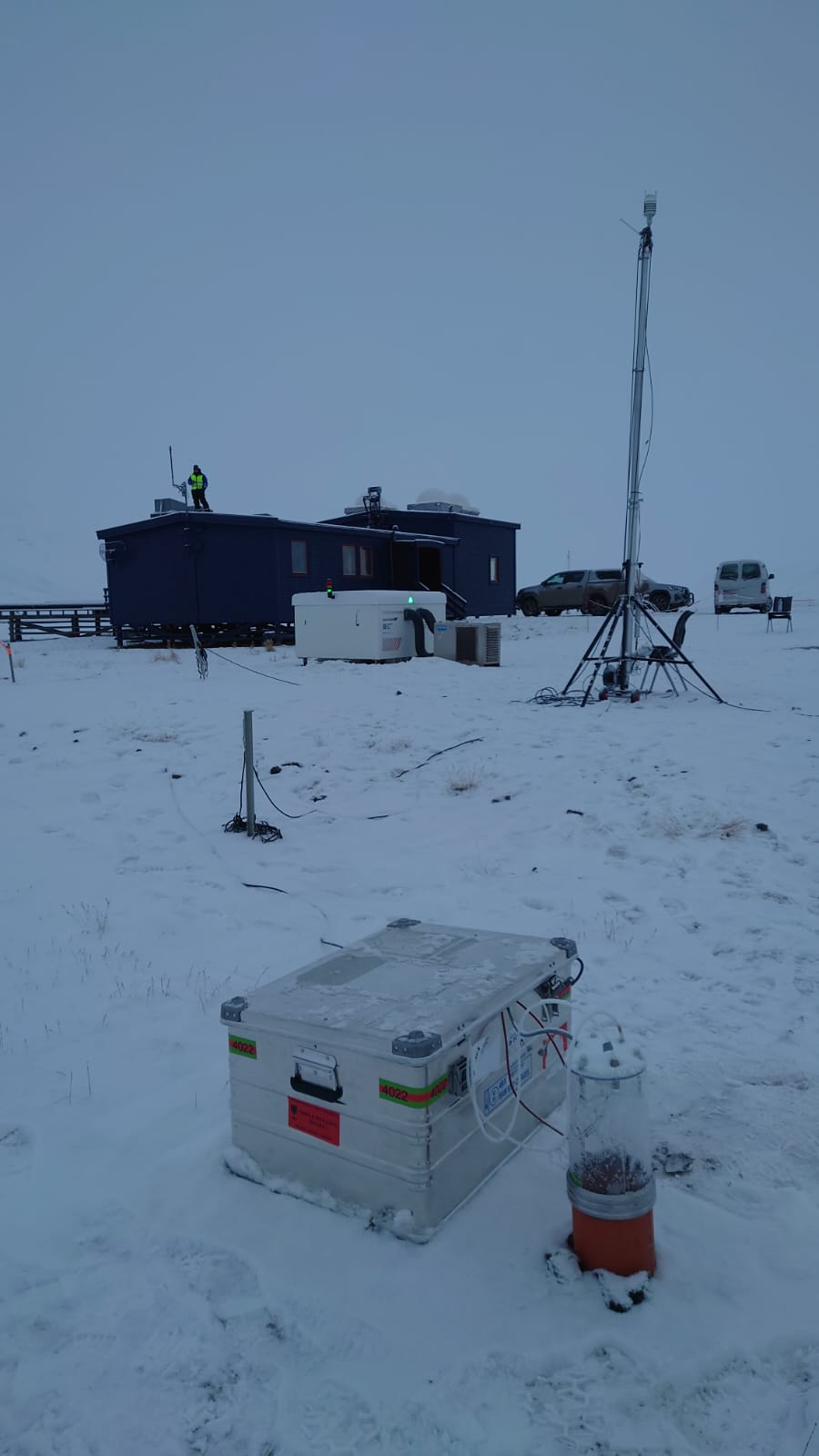
During the Svalbard field campaign, the MISO team tested a gas flux chamber system designed to measure greenhouse gas emissions directly from the ground in remote Arctic environments, with minimal maintenance requirements.
🔬 𝐇𝐨𝐰 𝐢𝐭 𝐰𝐨𝐫𝐤𝐬
- Greenhouse gases released from the soil are captured inside the chamber and circulated through the tubing.
- After a predefined measurement period, the chamber is flushed with ambient air before being closed again and the sequence is repeated.
- Gas concentrations are measured using the K96 sensor, and data are stored locally.
🚀 𝐓𝐨𝐰𝐚𝐫𝐝𝐬 𝐫𝐞𝐦𝐨𝐭𝐞 𝐝𝐚𝐭𝐚 𝐜𝐨𝐥𝐥𝐞𝐜𝐭𝐢𝐨𝐧
Over time, the system can be equipped with wireless communication, enabling data retrieval by UAVs and supporting fully autonomous operation in hard-to-access locations.
⚠️ 𝐋𝐞𝐬𝐬𝐨𝐧𝐬 𝐋𝐞𝐚𝐫𝐧𝐞𝐝
- Installing the chamber in Arctic conditions proved challenging due to frozen soil, which required preparing the ground using a hammer and chisel before lowering the ground pipe.
- Achieving a reasonably airtight seal between the frozen soil and the ground pipe was difficult, highlighting an important area for future design improvements.
📸 More insights from the Svalbard campaign coming soon!